


Curatorial statement
What is “Contemporary Ink Painting”? Though the term frequently appears in exhibitions, art criticism and academic discourse, its conceptual origins, real-world predicaments and future trajectories remain open to debate. The Unfinished Future: The 10th Anniversary of the Annual Review of Chinese Contemporary Ink Painting builds on a decade of practical work within the field, staging a reflective artistic survey revolving around three core themes.
First is the genealogy of “Contemporary Ink Painting”. Widely adopted today, this term is not an age-old artistic designation, but a formulation forged through decades of artistic practice. Following the 1985 New Wave Art Movement, multiple parallel approaches to ink art emerged, including Modern Ink Painting, Experimental Ink Painting, and New Literati Painting. Different artistic communities carried out continuous creative experiments and academic debates revolving around brush-and-ink transformation and conceptual innovation. For a long time, the contemporary renewal of ink art was scattered across diverse discourses without a unified designation. Through the efforts of successive generations of artists and art practitioners, together with the sustained driving forces from exhibitions, publications, symposia and the art market, disparate artistic experiments collided and converged, gradually coalescing into the shared professional term “Contemporary Ink Painting”. To clarify this history from divergence to convergence is far more than mere lexical research. It reveals that all our current explorations of contemporary ink are rooted in a complex cultural negotiation.
Beyond conceptual origins, Chinese contemporary ink painting faces a complex reception dilemma shaped by the tensions between tradition and contemporary practive, as well as between local and global perspectives. Within local critical frameworks, traditional Chinese painting takes the formal conventions of brush-and-ink and the continuity of artistic lieage as its core criteria. The conceptual experiments of contemporary ink painting are sometimes viewed as a departure from the orthodoxy of Chinese painting. From a global artistic perspective, however, ink art is often reduced to a generalized symbol of Eastern culture. The works’ inner real-world concerns and linguistic innovations are obscured, merely treated as exotic cultural spectacles. Hard to be fully accommodated by traditional painting’s evaluative system at home and prone to stereotyped misinterpretation abroad, contemporary ink has long been caught between two divergent systems of evaluation. This exhibition brings this predicament to the fore. Through juxtapositions of artworks, critical texts and exhibition archives, it confronts this value disjunction. Meanwhile, the local practice of Guangdong-Hong Kong-Macao ink art is introduced as a reference case. As a frontier of cultural exchange between China and the West, the region’s creative experience offers insights from an on-site local perspective for understanding this universal dilemma.
This leads to the third core question: how should we understand the future of ink art? Cross-medium creation has become commonplace. Many works superficially splice ink with installation and video, or even dissolve the ontological nature of ink painting, using ink merely as a cultural symbol. In response, the exhibition puts forward a clear argument: ink art evolves through the dissolution of boundaries, not the erasure of its essence. Ink remains grounded in the ontology of planar painting; medium integration does not mean abandoning its painterly identity. The so-called dissolution of boundaries refers to absorbing the spatial awareness, sense of process and visual narrative logic of other art forms, internalising their spiritual essence into the language of ink to expand ink's own expressive vocabulary. It does not mean stripping away its ontology and becoming subordinate to other art genres.
Featuring diverse samples, including works by artists from different generations and experiments by younger artists, the exhibition presents these ongoing, unfixed explorations. “Unfinished Future” signifies that there is no single template for the development of ink art; it is perpetually growing. Rather than delivering final conclusions, the exhibition juxtaposes conceptual genealogy, real-world dilemmas and medium explorations. It invites viewers to jointly ponder what possibilities still lie for ink art, between tradition and foreign influences, inheritance and innovation.
Annual Review of Chinese Contemporary Ink Painting,Lin Shuchuan
19 August, 2026
About the Artist
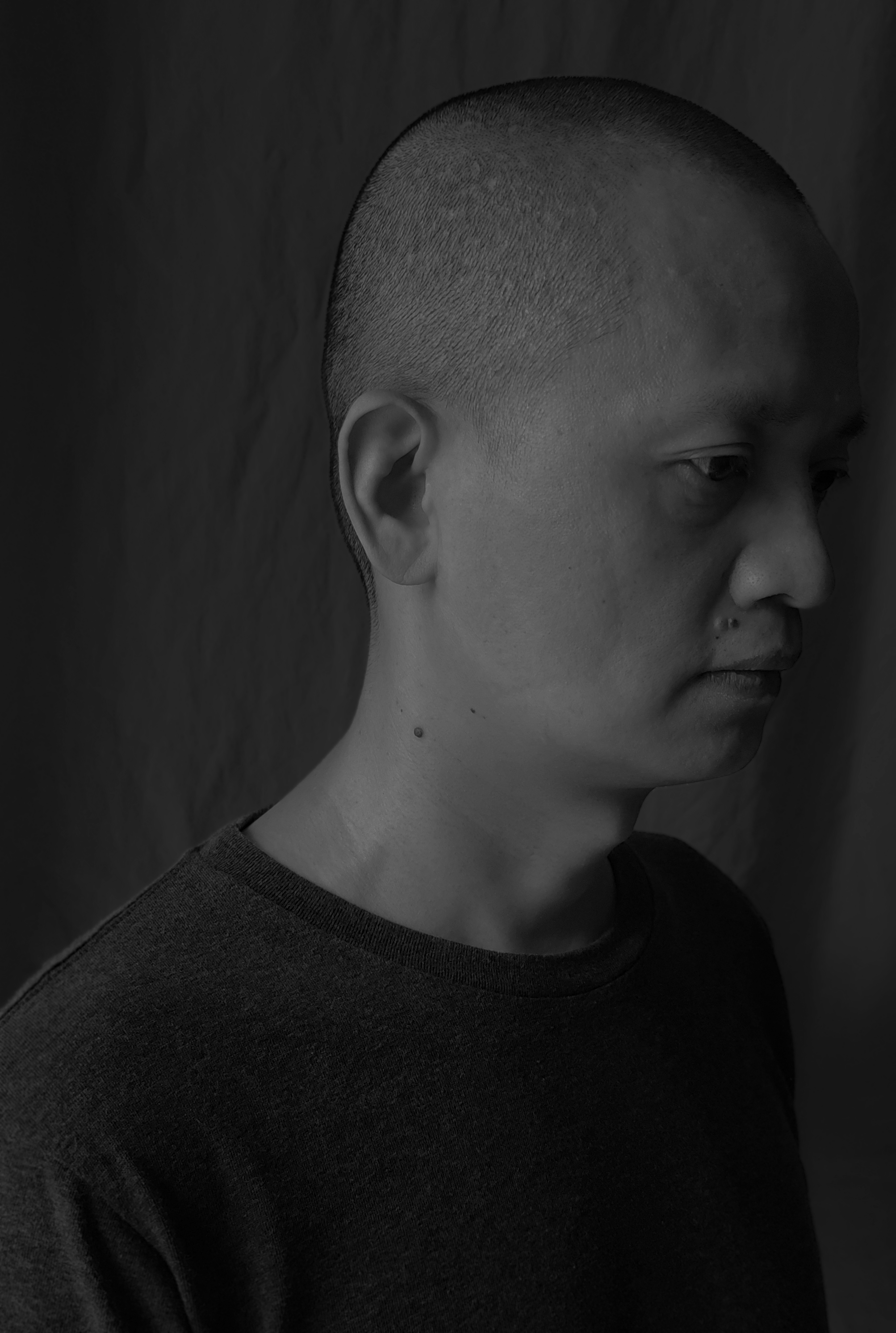
Tan Jun, born in 1973 in Xiangtan, Hunan. He graduated with Master Degree from the Chinese Painting Department, CAFA, China in 2005. Lives and Works in Xiangxi.
As a talent in the new generation of ink artists, Tan Jun puts his feelings and thoughts into his paintings with all sincerity and passion. His professional training and technical proficiency allow his pictorial expressions to remain faithful to his inner nature. His paintings harmonize modern Western art concepts with traditional Chinese expressionism, conveying the artist's thoughts on freedom and loneliness. His works retain the visibility of the medium. He makes the heterogeneous texture of paper and canvas stand out and creates an atmosphere of transcendence and freedom. The subtle unevenness at the junction distinguishes his pictures from standard flat images, which embodies the artist's philosophical thinking. Tan Jun's pure attitude towards painting lies in expressing the artist's spirituality and emotional truth. The lonely forms in his paintings concrete his questioning of being in Heidegger’s sense. These forms contain ancient meanings with a modern touch, leaving an untrammeled feeling for viewers.
The Unfinished Future: The 10th Anniversary of the Annual Review of Chinese Contemporary Ink Painting
Artistic Director: Wang Shaoqiang
Curator: Lin Shuchuan
Academic Chair: Shen Kuiyi
Producers: Zhang Kai, Zhang Zongxi
